Lead Slingers Outdoor Fishing Guide
%2F%2Fusers%2F079b6007-c9e9-4bde-b3d2-7340a9a19638%2Fratecard%2Fscreenshot2026-09-03194927-mtlmnijr.png&w=1920&q=75)
Night Fishing with Professional Green Light Buoys
Picture this: you're out on the water after dark, watching professional green lights pierce through the black water like underwater beacons. That's exactly what you get with Lead Slingers Outdoor Fishing Guide's top-rated night fishing adventure. We're talking about a completely different kind of fishing experience here – one that uses cutting-edge Night Fishing Buoys to bring the fish right to you. This isn't your typical cast-and-hope fishing trip. When those green lights fire up below the surface, they create an underwater magnet that draws crappie and white bass in numbers that'll make your reel sing. You'll be fishing with a seasoned guide who knows exactly how to position these buoys for maximum action, and the best part? We handle all the dirty work afterward – cleaning and bagging your catch so you can focus on what matters most: hauling in fish after fish in the glow of those mesmerizing green lights.
What to Expect on the Water
This night fishing adventure is built around our professional-grade Night Fishing Buoys – specialized equipment that most weekend anglers never get to experience. We're keeping our groups small at just 2 guests max, which means you're getting personalized attention and prime positioning around the lights. The whole setup revolves around these green light systems that we deploy strategically across productive water. Once those lights hit the depths, they start working like underwater dinner bells, attracting baitfish first, then the predators that feed on them. You'll see the water come alive in ways that daylight fishing just can't match. The action typically picks up within the first hour after deployment, and we've been consistently pulling in solid numbers of crappie and white bass on recent trips. Your guide handles all the technical stuff – positioning, light management, and reading the water – while you focus on setting hooks and landing fish. We provide all the tackle and know-how, so all you need to bring is a cooler stocked with your favorite snacks and drinks for the evening.
Light Buoy Techniques
These aren't your average fishing lights you'd pick up at a tackle shop. We're running professional Night Fishing Buoys that put out serious lumens in that fish-attracting green spectrum. The technique is all about patience and positioning – we deploy multiple buoys at varying depths to create productive fishing zones that concentrate fish activity. Each buoy gets anchored in specific spots based on structure, current, and depth. The green light penetrates the water column differently than white light, creating an attraction zone that draws in zooplankton and small baitfish, which in turn brings in the game fish we're targeting. We've got different sized buoys in our arsenal depending on conditions and what species we're focusing on that night. The smaller units work great for crappie in tighter areas, while our bigger buoys can pull fish from greater distances in open water. Your guide monitors each light zone and rotates fishing spots based on where the action is hottest. We also stock various buoy sizes for sale if you want to take this technique home with you, though nothing beats learning the proper deployment and positioning from someone who runs these lights regularly.
Target Species
White bass are the workhorses of this night fishing program, and they respond to green light buoys like kids to an ice cream truck. These silvery fighters typically run 12 to 16 inches in our waters and pack serious punch for their size. White bass are schooling fish, which means when you find one around the lights, you're likely looking at a feeding frenzy situation. They're most active during low-light periods, making our night fishing setup absolutely perfect for targeting them consistently. What guests love about white bass is their aggressive strike and the way they pull drag – they fight way above their weight class. Plus, they're excellent table fare when properly cleaned and prepared. The green lights bring them in close enough that you can often see the flashes of silver before your line even hits the water.
Crappie are the other star of our night light show, and these slab-sided beauties are what keep regulars coming back trip after trip. We're typically seeing crappie in the 10 to 14-inch range, with some real slabs pushing bigger when conditions align perfectly. Crappie have excellent night vision and are naturally drawn to light sources that concentrate their food supply. They tend to suspend at specific depths around the buoy lights, often holding in that sweet spot where the green glow starts to fade. What makes crappie special is their finicky nature – they can be incredibly selective about presentation, which makes landing a limit that much more satisfying. These fish are also premier eating, with sweet, flaky white meat that's perfect for a fish fry. During peak activity around the lights, crappie will often stack up in numbers that let you fill your cooler with quality fish for the freezer.
Time to Book Your Spot
This isn't just another fishing trip – it's your chance to experience a specialized technique that most anglers never get to try. Our professional green light buoy system consistently produces fish when traditional methods fall flat, and our small group size ensures you're not fighting for prime spots around the lights. We handle everything from setup to cleanup, including cleaning and bagging your entire catch so you leave with coolers full of fresh fillets ready for the table. The combination of cutting-edge lighting technology, expert guidance, and productive waters creates the kind of fishing memories that have guests rebooking before they even leave the dock. Whether you're looking to learn a new technique, put fish in the freezer, or just experience something completely different from daytime fishing, our night fishing buoy program delivers results. Don't wait – spots are limited to maintain the quality experience our customers expect, and the best fishing windows book up fast with repeat guests who know what this trip can produce.
Learn more about the species
Crappie
Crappie (Poxomis)
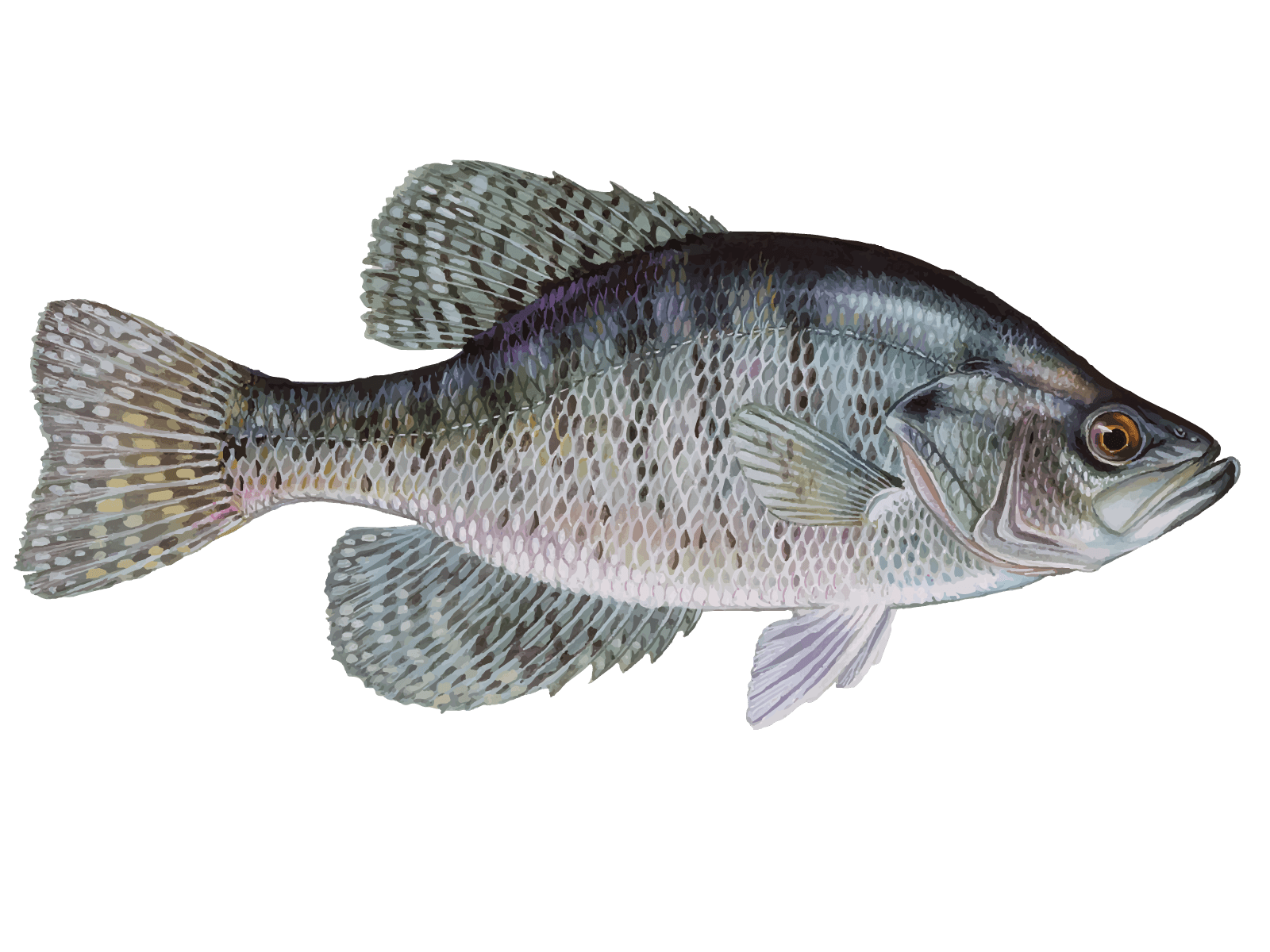
Crappies are game fish and the largest members of the Centrarchidae family. They are present in nature as Black Crappie (Poxomis nigromaculatus) or and White Crappie (Poxomis annularus). Both the species are similar to each other, apart from few distinctions. White crappie will have vertical bars running the length of their body, and black crappie will have no discernible pattern and will just be speckled, hence their nickname, “specks". White crappie has 5-6 spines, and black crappie has 7-8 spines. Anglers often differentiate the two by body shapeGrenade Lake, Mississippi, and Reel foot Lake are considered among giant crappie lakes.
Crappie Habitat and Distribution
Both the crappies have a similar habitat, though black crappie prefers clearer water than white crappie. These fishes can be found in rivers, lakes, and backwater pools swimming in shallow waters or hiding among bushes, vegetation, or other covers.
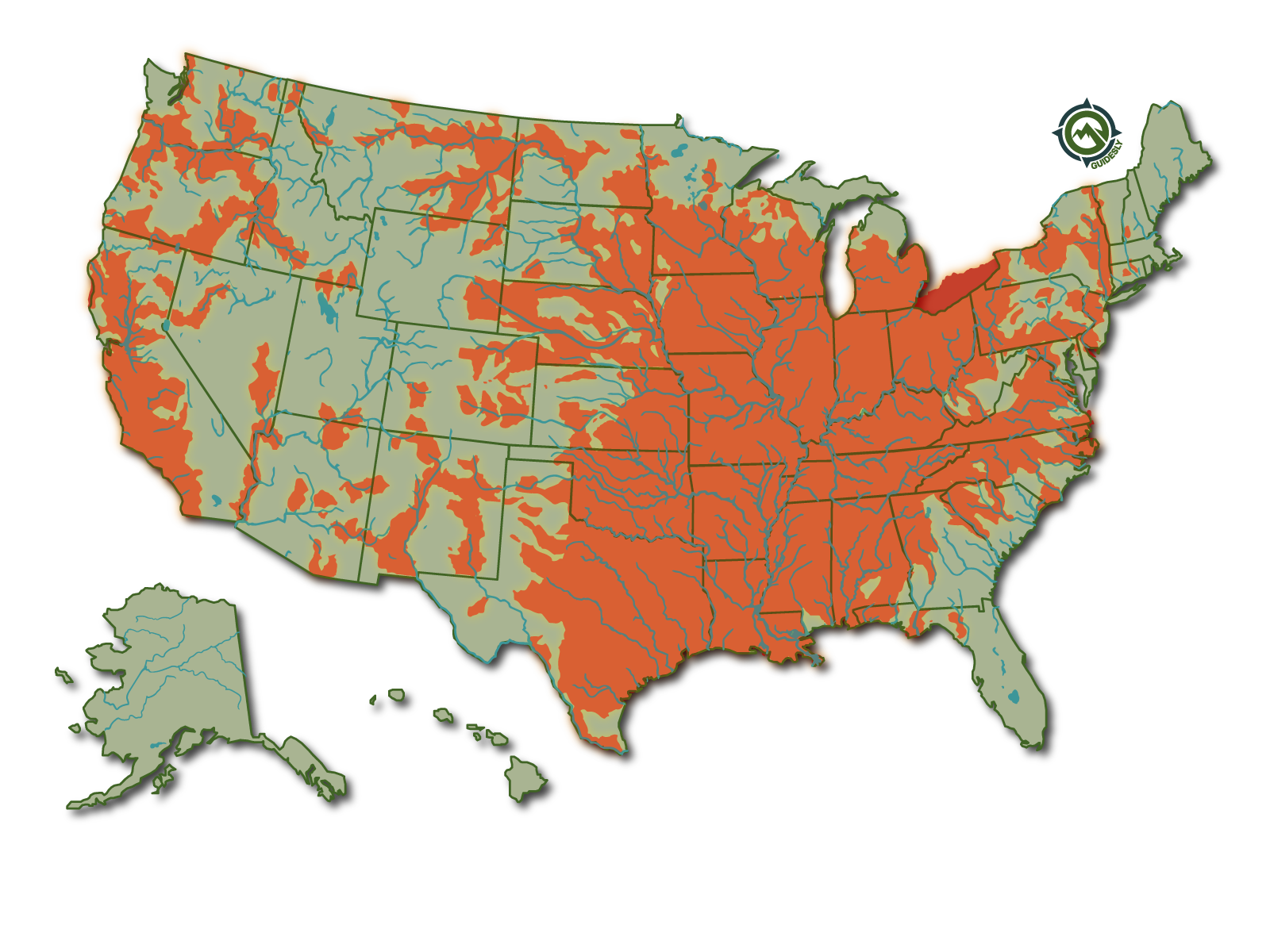
Crappie is native to Canada and the eastern States. It is a much-enjoyed game fish in North America and inhabits the Great Lakes, Hudson Bay, and the Mississippi River Basins.
Crappie Size and Weight
Crappie can be 7-12 inches long and weigh about 0.5-1 pounds.
Crappie Interesting Facts
Crappie is known for its tasty and white meat.
- Both Poxomis nigromaculatus and Poxomis annularus are less active during the day.
- Both the fishes have a different number of dorsal fin spines. White Crappie has 6 while Black Crappie has 7 or 8.
- Mouth of Black Crappie is larger and reaches mid-eye and has a resemblance to largemouth bass.
- Crappie travels in schools.
- Female lays 5000-60000 eggs.
- Crappie can live for 7 to 10 years.
Is Crappie Good to Eat?
Despite its name, crappie is an excellent source of nutrition, containing high amounts of protein and essential omega-3 fatty acids. Although it's not as popular as salmon or tuna, crappie can be a delicious addition to any healthy diet. They are known for their delicate taste and ease of preparation.
When cooked properly, crappie has a delicate flavor and flaky texture, making it perfect for grilling, frying, or baking. Moreover, because they are smaller fish than other common species, such as bass or catfish, the chances of mercury contamination in their flesh are much lower.
Crappie Spawning
Crappie spawning season begins in early spring and summer when the water temperature is 62 F-68 F. Male builds the nest in soft or gravelly spots, the female lays the eggs, and the male guards the nest. Eggs take 2 to 5 days to hatch.
Crappie Food
Depending on the age, Crappie victims consist of zooplankton, crustaceans, small fish, minnows, insects, gizzard or threadfin shads, and larvae of other game fishes.
Crappie Fishing
Crappie is most active at dawn or dusk. Anglers recommend using live bait and properly sized hooks, not too small, not too large.
Spin or Bait Fishing for Crappie:
Spin fishing for crappie is a popular angling technique used for years. The use of small lures, such as crappie spinners or jigs along the bottom with light tackle, makes it possible to catch these elusive fish with ease. Crappie spinner fishing involves using a spinning rod and reel setup to cast the lure out into the water and retrieve it in a steady fashion.
When fishing for crappie with a spinner, it's essential to choose the right size and color of the lure. Smaller lures are more effective when targeting this species due to their smaller mouths. Additionally, selecting colors that mimic the natural prey of crappie can help increase your chances of catching them. It's also important to consider where you're casting your line when using spinners for crappie fishing.
Another popular technique is a bobber with a hook with live bait such as worms or small minnows. This is a proven method to catch crappie.
Fly Fishing for Crappie:
- Fly fishing for Crappie is exciting. Both dry and wet flies work well. Use dry flies on still and calm days, especially early and late. A great way to start a young angler on fly fishing, crappie is not as challenging as much other game fish.
- The best-wet flies for fly fishing are streamers and nymphs and soft large hackles. Streamers (small) are perfect when the fish is eating minnows.
- Anglers can fly fish for Crappie near fallen trees or bushes using a dry or wet fly. Be patient and let the fish properly take the hook. - Clouser Minnow is the ultimate fly bait that can catch even the sluggish crappie.
Crappie Baits and Lures:
- Spinners
- Pan-fish jigs
- Small crankbaits
- Insects
- Worms
- Streamer flies
- Small minnows
- Nymphs
White Bass
White Bass (Morone chrysops) Fish Description
Also known as Sand Bass or Silver Bass, the White Bass is a member of the Moronidae or Bass Family.
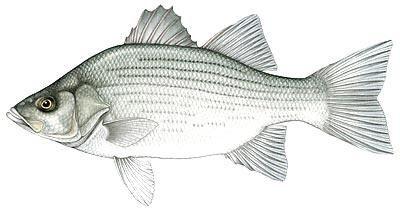
As its name suggests, the White Bass is primarily colored silvery-white to pale green. Its back is darker, but its belly and sides are white. The White Bass has narrow and dark stripes along the sides of its belly. It has rough scales that are distinctively big; it possesses two dorsal fins. Its body is compressed laterally.
To identify White Bass, look for a lateral line with around 51 to 60 scales. This species also has dorsal fins numbering 12 to 14; anal fin rays, 11 to 14; pectoral fin ray, 15 to 17; and 20 to 25 gill rakers. Another characteristic of the White Bass is its prominent tooth patch near the tip of its tongue.
Diet and Size
As a carnivorous feeder, the White Bass has at least four favorite major diet options: the leptodora, daphnia, cyclopoid copepods, and calanoid copepods. White Bass are visual feeders who will readily bite any live bait especially minnows and worms.
The White Bass can measure up to 10 to 12 inches in length; some are even recorded to have reached 18 inches. Generally, they weigh up to 7 pounds.
Interesting Facts About the White Bass
- The White Bass is Oklahoma’s state fish.
- The White Bass has gained acclaim as a significant sport fish in Manitoba since it was introduced there in the 1960s.
- The White Bass has a “fake” spinous ray. It also has a homocercal tail.
- Female White Bass lay around 240,000 to 930,000 eggs; they spawn from mid-March to late May.
- One unusual mating ritual among the White Bass is how males bump against the female’s abdomen. After that, the female goes near the surface to begin spinning and releasing eggs.
White Bass — Fishing Techniques
The White Bass is very popular among recreational anglers; in fact, this is the fifth most favored species among licensed fishers from Texas.
Once you sight a school of White Bass, make sure to use spinners or spoons along the water surface to entice them. One other common method of luring them is by using bottom fishing at night; you can also utilize live bait.
You can use small jigs as artificial lures; a 1/8 ounce marabou jig should do the trick. For best results, use jigs that are black or white. If you go for soft plastic lures, try the tube bait, or a small jig head with a curly tail grub. One other lure you can utilize is a small jig packed with soft plastic swimbaits; you can have either the 1/8 or ¼ ounce jigs.
Be careful because White Bass are known to be aggressive fighters. However, this struggle may be worth it because of its exceptional taste.
Note that every state may have some regulations as to the size, length, and other factors related to capturing this fish.
White Bass Habitat and Distribution
The White Bass are fairly distributed in the US, especially in the Midwest. They are plenty around Lake Erie and Pennsylvania. Most of the White Bass population are native to Lake Poinsett, Detroit River, Arkansas River, the Great Lakes, and the Red River drainage. They also inhabit the lakes in Winnebago, Wisconsin and the rivers in Mississippi.
This species generally inhabits big rivers and shallow rivers, reservoirs, streams, and creeks. They are often found upstream where there are high densities.
About the Custom Build
%2F%2Fusers%2F079b6007-c9e9-4bde-b3d2-7340a9a19638%2Fvehicle_picture%2Fscreenshot2026-09-03195219-mtlmdctr.png&w=1920&q=75)
Vehicle Guest Capacity: 10
Manufacturer Name: Mercury
Maximum Cruising Speed: 45
Number of Engines: 1
Horsepower per Engine: 150